Choosing between hydroponics and traditional soil gardening depends on your available space, budget, and how much control you want over your garden.
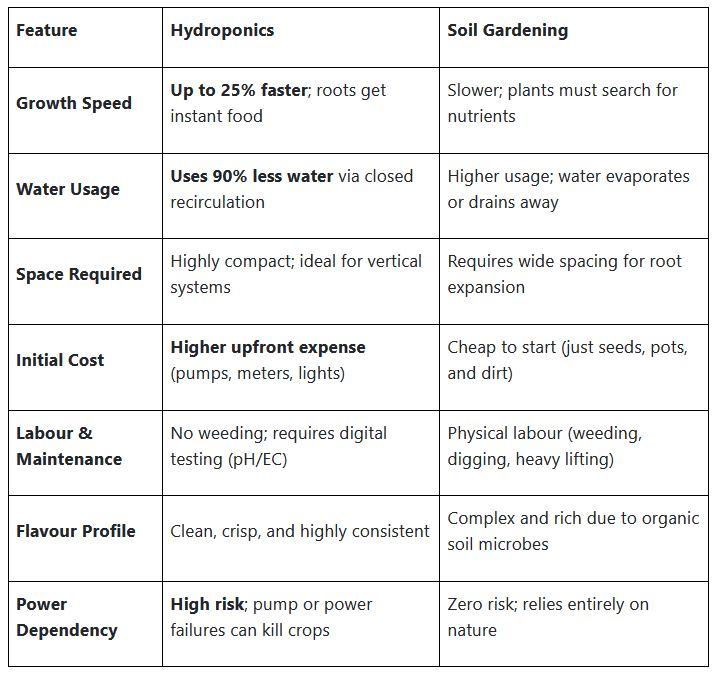
Here is a direct comparison of how the two methods stack up against each other:
Side-by-Side Comparison
Why Hydroponics Wins
-
Total Resource Efficiency: Because water is contained in a sealed reservoir, it does not evaporate into the air or sink uselessly into the ground. It is recycled through the system until the plant drinks it.
-
Maximum Space Control: Soil roots spread out wide to search for food. Hydroponic roots are constantly bathed in nutrients, meaning they stay small and compact. This allows you to pack up to four times as many plants into the same area.
-
A Clean Indoor Environment: Growing without soil means you leave weeds, mud, potting mix pests (like fungus gnats), and soil-borne diseases completely out of your home.
Why Soil Wins
-
Forgiving Ecosystem: Soil acts as a natural buffer. If you make a mistake with your fertiliser or water too much, the soil protects the plant. In hydroponics, a mistake with your water chemistry can damage or kill your plants within hours.
-
Low Cost and Zero Electricity: A soil garden does not turn off if there is a power blackout. It requires no pumps, no digital sensors, and no constant monitoring. It is a highly reliable, low-tech way to grow food.
-
The Organic Microbial Network: High-quality soil is full of beneficial bacteria, fungi, and organic matter that give vegetables and herbs highly complex, traditional flavor profiles that can be difficult to replicate perfectly in a purely water-based system.