When comparing microplastics in hydroponics versus soil-based gardening, the primary differences lie in the sources of contamination and the bioavailability (how easily the plants can absorb the particles).
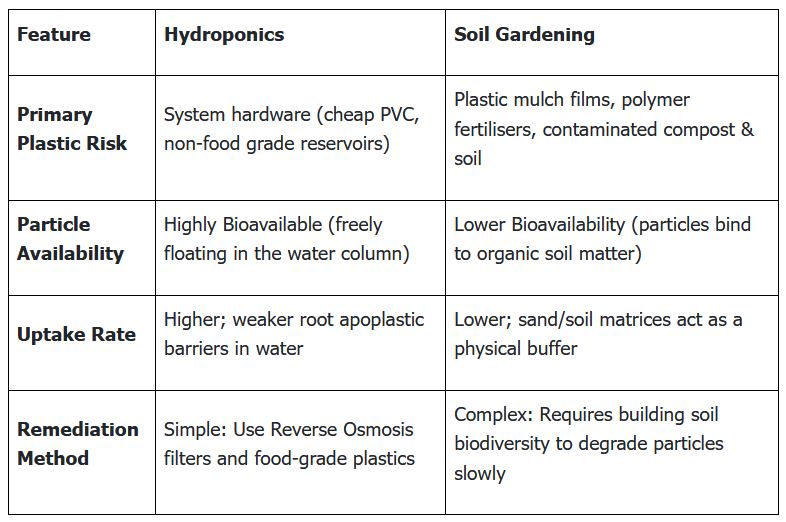
Side-by-Side Comparison
The Hydroponic Equation: High Control, High Exposure Risk
In a hydroponic system, outside soil pathways like plastic mulch film breakdown, sewage sludge, or polymer-coated farm fertilisers can be completely eliminated. However, if plastics are present in the water, the risk of the plant absorbing them is significantly higher.
-
Free-Floating Particles: Because there are no soil particles or organic matter for the nanoplastics to bind to, they float freely in the liquid reservoir.
-
Aggressive Root Uptake: Studies show that plants grown directly in water develop a weaker root apoplastic barrier. Combined with high transpiration rates, roots can easily suck up nanoplastics via osmosis, moving them into the edible stems and leaves.
-
The Mitigation Strategy: Hydroponic growers can completely eliminate this risk by avoiding cheap brittle plastics, using certified food-grade HDPE (#2) or Polypropylene (#5), and running a Reverse Osmosis (RO) filter to catch plastic particles before they enter the system.
The Soil Equation: High Contamination, Natural Buffering
Commercial soil farms and home soil gardens face massive atmospheric and land-based plastic deposition. Soil is heavily contaminated globally by degraded agricultural weed-matting, commercial composts containing plastic fragments, plastic mulch and synthetic fertiliser coatings.
-
Natural Trapping Mechanism: Soil has a high buffering capacity. Nanoplastics naturally attach to soil minerals, clay, and organic matter. This physical binding locks the plastic in place, making it far harder for plant roots to physically absorb them.
-
Microbial Assistance: Healthy soil ecosystems contain diverse microbes and fungi. Over long periods, these beneficial organisms can slowly colonise and biochemically degrade plastic particles, reducing their presence over time.
-
The Mitigation Strategy: Soil growers must actively avoid plastic sheet mulching, build up high levels of organic compost, and avoid municipal wastewater or untreated greywater.
It is clear that both systems (soil and hydroponics) are vulnerable to microplastic and nanoplastic contamination, but they interact with the particles in different ways. The risks can be reduced by choosing the correct materials practices in both soil and hydroponics.