When your hydroponic system experiences issues, the problem can usually be traced back to the water, the roots, or the leaves. Because water recirculates continuously, identifying and addressing symptoms early is critical to saving your crop.
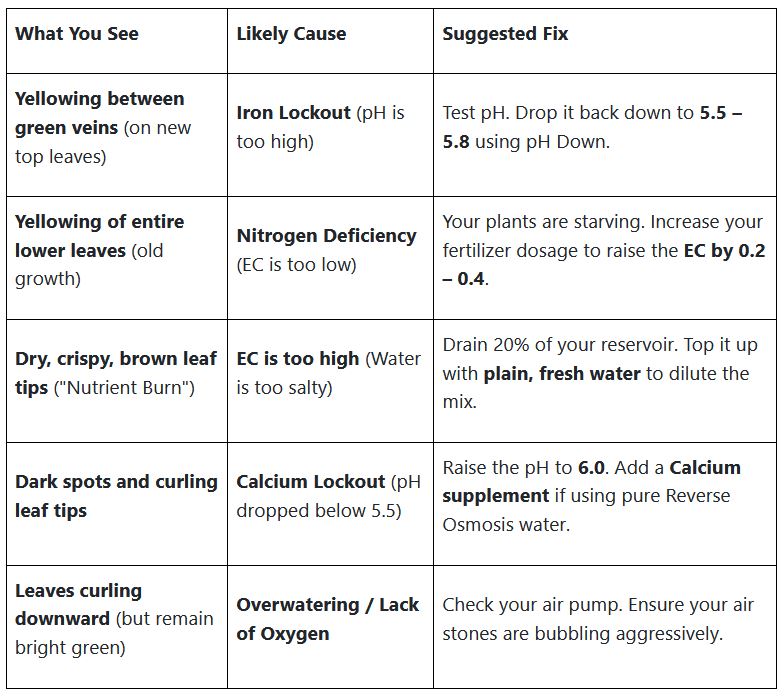
Here is a comprehensive troubleshooting matrix for the most common hydroponic failures:
1. Plant Leaf Symptoms (Nutrient & Environment Issues)
2. Root Zone Symptoms
Slimy, Brown, or Foul-Smelling Roots
-
The Problem: Root Rot (caused by Pythium fungus). This occurs when the water temperature is too high or lacks sufficient dissolved oxygen.
-
The Fix:
-
Chop away the worst-affected mushy brown roots.
-
Soak the remaining roots in a diluted bath of 3% food-grade hydrogen peroxide (approx. 5mL per litre of water) to kill the fungus.
-
Flush, scrub, and sterilise your entire reservoir.
-
Refill with fresh nutrients, add an extra air stone, and keep water temperatures below 21°C.
-
Stunted Root Growth (Short, stubby, or blunt roots)
-
The Problem: Severe pH shocks or chlorine toxicity from untreated tap water.
-
The Fix: Never add raw tap water straight to your system. Always bubble tap water for 24 hours first to clear the chlorine, and always dilute your pH adjusters before pouring them in.
3. Water & Reservoir Problems
My pH bounces up or down drastically every 24 hours
-
The Problem: Your reservoir volume is either too small for the size of your plants, or you have hidden algae growing inside the tank.
-
The Fix: Wrap your water containers in aluminium foil or black plastic to block out all light. If the reservoir is under 20 litres, consider upgrading to a larger container to increase your chemical buffer.
White crusty powder forming on pipes and clay pebbles
-
The Problem: Salt Build-up from mineral evaporation, or your water is naturally too hard.
-
The Fix: Wipe away the crust with a damp cloth. Run plain, pH-adjusted water through your system for 24 hours between crop cycles to flush out historical salt deposits. check source-water hardness.