There are six standard types of hydroponic systems. They all deliver water, nutrients, and oxygen to plant roots, but they use different structural methods to do it.
1. Deep Water Culture (DWC)
The roots are constantly submerged in an oxygen-rich nutrient solution.
How it works: Plants sit in net pots filled with clay pebbles. The pots hang directly over a reservoir. An aquarium air pump continuously bubbles oxygen into the water to keep the roots from drowning.
Best for: Leafy greens, lettuce, and herbs.
Pros: Very simple, cheap, and highly forgiving for beginners.
Cons: Temperature sensitivity, disease risk, algae growth.
2. Wick System
The simplest system available, operating with no moving parts or electricity.
How it works: The plant container sits above a nutrient reservoir. A fabric wick (like a piece of rope or felt) connects the two. Capillary action naturally draws the water up the wick into the growing medium.
Best for: Small, slow-growing plants like microgreens and herbs.
Pros: Silent, low-cost, and completely foolproof.
Cons: Cannot support large, water-hungry plants like tomatoes.
3. Nutrient Film Technique (NFT)
The method most commonly used for growing strawberries, salad greens like lettuce and in commercial vertical farming.
How it works: Plants sit in slightly tilted long channels or pipes. A pump constantly sends a very shallow, continuous stream (a "film") of nutrient water down the channel over the bare roots, draining back into a reservoir below.
Best for: Fast-growing, lightweight crops like strawberries and loose-leaf lettuce.
Pros: Highly water-efficient; uses no heavy growing medium.
Cons: Pump failures or power outages can kill the plants in just a few hours.
4. Ebb and Flow (Flood and Drain)
A system that relies on a timed cycle of wetting and drying.
How it works: Plants sit in a grow tray filled with medium. A pump connected to a timer periodically floods the tray with nutrient solution. When the timer turns off, the water drains completely back down into the reservoir, pulling fresh oxygen down into the root zone.
Best for: Heavy-rooting plants, root vegetables, and larger crops like tomatoes.
Pros: Highly customizable and works well with many different growing mediums.
Cons: Reliance on pumps, shared reservior, salt buildup.
5. Drip System
The most widely used hydroponic layout globally for commercial production of fruiting type plants like tomatoes, capsicum and cucumbers.
How it works: Water is pumped from a reservoir through a network of small tubes. A small emitter (dripper) drops the nutrient solution directly onto the base of each individual plant growing medium. Excess water either drains back to the tank or runs to waste.
Best for: Large, long-term fruiting plants like cucumbers, tomatoes, and capsicums.
Pros: Provides precise control over water delivery; ideal for large-scale setups.
Cons: High initial costs, risk of drippers clogging, salt buildup, root diseases.
6. Aeroponics
The most technologically advanced and high-tech approach.
How it works: The plant roots hang freely suspended in the air inside a sealed chamber. High-pressure nozzles mist the roots with a fine spray of nutrient solution every few minutes, maximizing oxygen exposure.
Best for: Cloning plants, leafy greens, and high-value crops.
Pros: Fastest plant growth rates and uses the absolute least amount of water.
Cons: Expensive to set up; mist nozzles can clog easily.
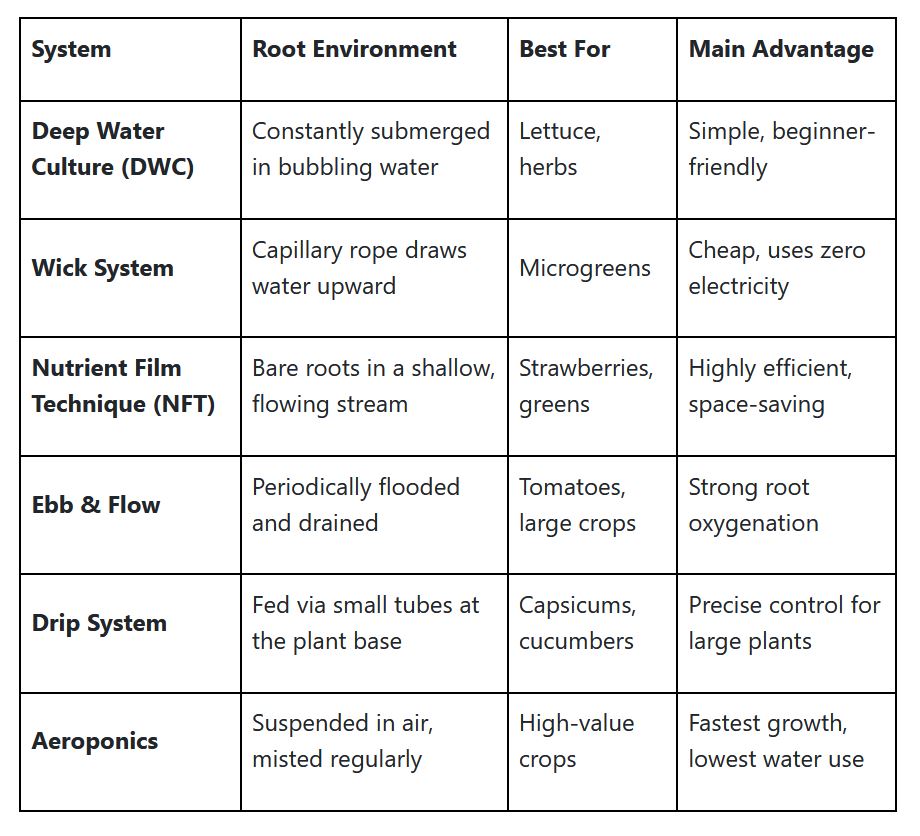
Overview and comparision of the six standard hydroponic systems:
If you are thinking of starting in hydroponics and need some help in deciding what system to use, send us details on your choice of crop and we will assist.