
Growing hydroponic cucumbers is an incredibly fast-paced project. Cucumbers are among the highest-yielding crops in hydroponics, growing up to 30% faster than in soil. Because they are mostly made of water, they drink heavily and require large amounts of vertical space and strict humidity control.
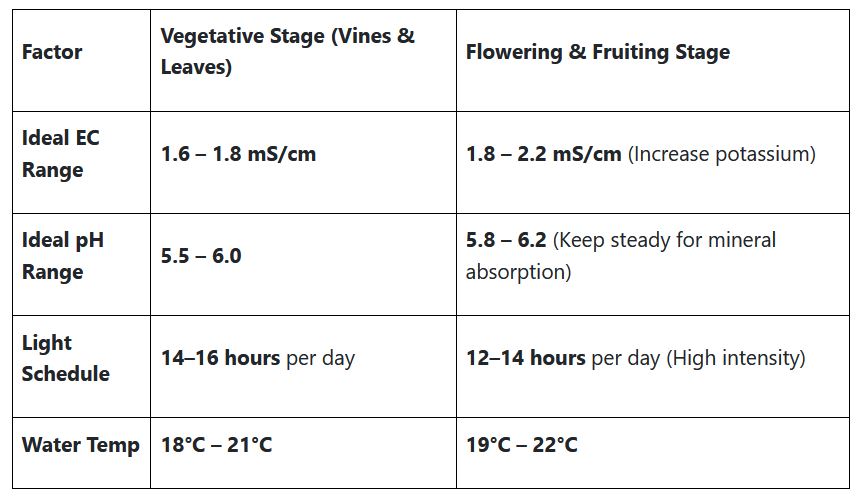
The Cucumber Environment Profile
Cucumbers thrive in warm, humid conditions with strong, steady nutrition:
Step-by-Step Growing Guide
1. Choose Parthenocarpic Varieties
-
Standard outdoor cucumbers require bees to move pollen from male flowers to female flowers.
-
For indoor hydroponics, always buy "Parthenocarpic" varieties (such as Lebanese, Persian, or European greenhouse cucumbers). These varieties are specifically bred to produce fruit without any pollination, saving you hours of manual work.
2. Fast Germination (Weeks 1–2)
-
Cucumber seeds sprout rapidly, usually within 2 to 4 days.
-
Plant them in rockwool cubes or coco plugs. Keep them warm and consistently moist.
-
Move them under grow lights immediately once the first green shoots appear to prevent weak, spindly stems.
3. Select a Heavy-Duty System
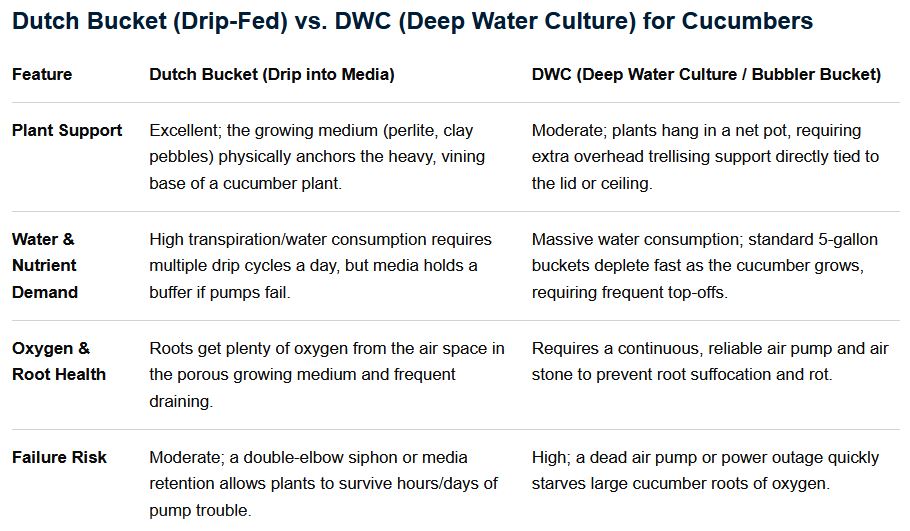
Cucumbers develop massive, aggressive root networks and drink litres of water every day. They perform best in:
-
Dutch Buckets: The commercial gold standard. Filled with clay pebbles or perlite, with a continuous drip line fed from a large reservoir.
-
Deep Water Culture (DWC): Excellent for growth speed, but you must use a large container (minimum 15 - 20 litres per plant) so the roots don't drink the reservoir dry overnight.
4. Vertical Trellising & Spacing
-
Cucumbers produce long tendrils that want to climb. You must provide a vertical trellis network, plastic netting, or overhead support strings.
-
Space your main root zones at least 30 to 45 cm apart to allow their large, umbrella-like leaves enough room to expand without shading out neighbouring plants.
⚠️ Vital Maintenance & Pitfalls
-
Pruning the Bottoms: As the vine climbs up your trellis, clip away any old, yellowing leaves or tiny side-shoots on the bottom 30 cm of the plant. This keeps fresh air flowing through the base, preventing root-zone humidity spikes.
-
Powdery Mildew Risk: Cucumber leaves are highly susceptible to powdery mildew (a white, flour-like fungus) due to their large surface area trapping stagnant & humid air. Keep oscillating fans running to maintain strong airflow across the canopy.
-
Rapid Reservoir Drifts: Because a mature cucumber plant drinks water at an extreme rate, the nutrient salts left behind in your tank will cause your EC to spike drastically in a single afternoon. Check your water levels daily and top off with plain, pH-adjusted water to prevent severe root burn & nutrient problems.