
Growing capsicums (also known as bell peppers or sweet peppers) hydroponically delivers sweet, thick-walled fruit with incredibly vibrant colours. Capsicums belong to the same family as tomatoes, meaning they love warm environments and intense light, but they grow at a much slower and more deliberate pace.
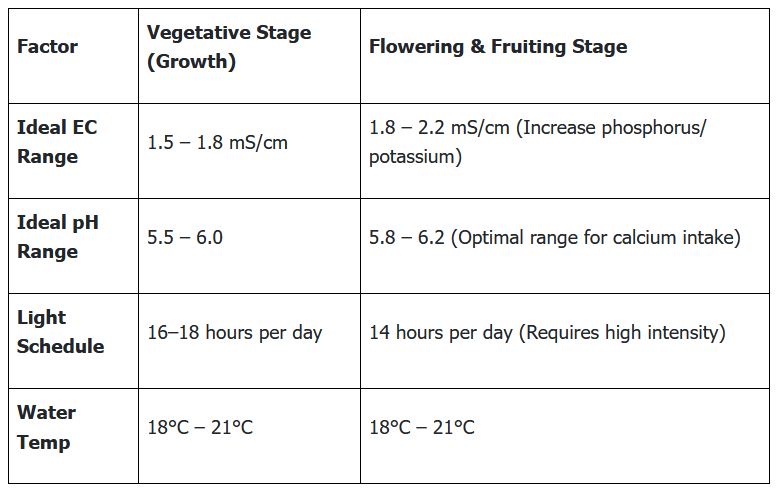
The Capsicum Environment Profile
Capsicums require precise nutrient management to ensure they transition from growing leaves to pushing out heavy fruit:
Growing Guide
1. Germination & Seedling Phase (Weeks 1–4)
-
Slow Starters: Capsicum seeds can take 7 to 14 days just to sprout. Keep your starter cubes (rockwool or coco) consistently damp and warm (around 25°C ambient temperature).
-
Once sprouted and true leaves form, feed them a weak nutrient solution at an EC of 0.8.
-
Transplant into your main system when the roots poke out of the bottom of the cube.
2. Choosing Your System
Capsicums develop a heavy, woody root system and a top-heavy canopy. They do best in:
-
Dutch Buckets / Drip Systems: Packed with coco media, clay pebbles or perlite. This is the commercial standard.
-
Ebb & Flow Trays: Great for managing multiple capsicum plants together.
-
Deep Water Culture (DWC): Highly effective, but you must install some trellising to stop the plants from tipping over when fruiting.
3. Structural Pruning
-
Left alone, capsicums grow into tall, brittle bushes that snap easily.
-
The Fix: When your young plant reaches about 20 cm tall, snip off the main growing tip. This forces the plant to split into a strong "Y" shape with two main branches. This creates a sturdier frame and also increases your total fruit yield.
4. Indoor Pollination
-
Capsicum flowers are self-pollinating, but indoor setups lack the wind required to shake the pollen loose.
-
How to do it: Once the small white flowers open, gently tap the flower stems or use an electric toothbrush against the branch for 2 seconds. Do this daily to guarantee the flowers turn into fruit.
⚠️ Common Pitfalls
-
Blossom End Rot: Just like tomatoes, if capsicums lack calcium, the bottom of the fruit will turn black, mushy, and ruined. Ensure your pH never drops below 5.5, maintain good airflow with a fan, use a calcium supplement and consider spraying a good quality calcium foliar spray.
-
Flower Drop: If your plant produces flowers but they suddenly turn yellow and drop off without fruiting, it is a sign of stress. The cause is usually high temperatures (above 30°C), extreme humidity spikes, or an EC that is too high.
-
The Waiting Game (Colour Change): All capsicums start green. It can take 3 to 4 weeks after the fruit reaches full size for it to finally change color to red, yellow, or orange. Do not harvest early unless you want green capsicums.
- Proper Nutrient: Use a quality nutrient that has been especially formulated for fruiting plants, like Origin Hydro's Hydroponic Nutrient Liquid and Hydroponic Nutrient Powder for flowering & fruiting plants.