Growing hydroponic tomatoes is incredibly rewarding, yielding sweet, juicy fruit up to 25% faster than soil. Because tomatoes are large, heavy-fruiting vines, they require stronger nutrients, intense lighting, and physical structural support.
The Tomato Environment Profile
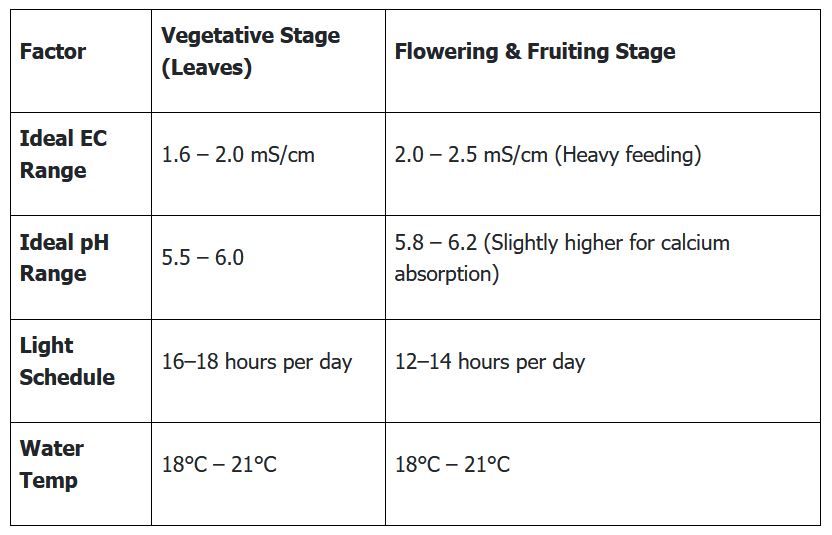
Tomatoes change their dietary needs as they mature. You must adjust your environment to match their growth stages:
1. Choose the Right Variety
-
Determinate (Bush): Grow to a fixed size (usually 1–1.2 metres). Best for small spaces, tents, and standard Ebb & Flow trays.
-
Indeterminate (Vining): Keeps growing and fruiting indefinitely. Best for large Drip systems or Dutch Buckets, but require serious vertical trellising.
-
Beginner Recommendation: Start with Cherry Tomatoes. They are far more forgiving and fruit much faster than large beefsteak varieties.
2. Sprouting and Early Care (Weeks 1–3)
-
Sprout seeds in rockwool cubes or coco starter plugs using plain, pH-adjusted water.
-
Once true leaves appear, feed at a weak EC of 0.8.
-
Transplant into your main system when roots aggressively poke through the bottom of the starter cube. Target EC 1.6 to 2.0 for the vegetative stage and EC 2.0 to 2.5 for the fruiting stage.
3. Supporting the Canopy (Weeks 4+)
-
Tomatoes will collapse under their own weight. Drop a vertical overhead string trellis or install a sturdy tomato cage.
-
Gently wrap the main stem around the support line as it grows upward.
4. Pollination
Outdoors, wind and bees pollinate tomato flowers. Indoors, you must do this manually, or the flowers will dry up and fall off without producing fruit. Once flowers open, gently tap the back of the flower clusters or vibrate the stem with an electric toothbrush for about 2 seconds. This releases the pollen internally. Do this daily around midday.
⚠️ Essential Maintenance & Troubleshooting
-
Pruning "Suckers": Look at the "V" intersection where a leaf branch meets the main stem. A tiny new stem (a sucker) will sprout there. Pinch these off immediately. If left to grow, they steal energy from the plant, resulting in massive leaves but tiny, sour tomatoes.
-
Preventing Blossom End Rot: If the bottoms of your tomatoes turn black and leathery, your plant has a calcium deficiency. This is usually caused by stagnant air or an unstable pH blocking calcium intake. Add extra Calcium to the nutrient reservoir, use a good quality calcium foliar spray and keep an oscillating fan running.
-
Flushing the Tank: Tomatoes drink massive amounts of water, causing the EC in your tank to spike rapidly. Flush your entire system and refill it with fresh nutrients every 14 days to prevent toxic salt build-up.
- Proper Nutrient: Use a quality nutrient that has been especially formulated for fruiting plants, like Origin Hydro's Hydroponic Nutrient Liquid and Hydroponic Nutrient Powder for flowering & fruiting plants.